Running a successful SME in Europe today feels like spinning plates. One hand juggles rising costs, another keeps an eye on compliance, and any slip can mean lost sales or unhappy customers. Many of us have tried patching things up with generic SaaS tools, but something always gives: features that don't fit, recurring fees, data privacy worries, or an inflexible setup that keeps us just another face in the crowd.
What if your software didn't just work for your business, but with your business?
This is where custom digital tools really shine. Built for the way your team actually works, they promise better control, smarter spending, and less noise—if you make the right calls along the way.
What are custom software solutions and how are they different?
When we talk about bespoke digital systems for SMEs, we're discussing applications designed around your unique processes, rather than a mass-produced platform. These are tools crafted (or automated) to match your workflow, data structure, and compliance needs—not the other way around.
“Off-the-shelf” or “SaaS” services deliver convenience out of the box. They cover common business needs—CRM, project tracking, invoicing, and so on. The appeal? Fast to set up, typically no hardware investments, and providers handle updates. Research from the OECD points to these advantages: automatic upgrades, technical simplicity, and ongoing support.
But there’s a catch that hits close to home, especially for European SMEs:
- You pay monthly – forever
- Extra features often require steep upgrades
- Exporting your data or changing providers can be tricky
- Some platforms store your data outside the EU (GDPR headaches)
- Your workflows must fit their design, not yours
By contrast, specific (or custom) systems are planned just for you and owned by you. They integrate your favorite tools, automate your routines, and can be altered as the company grows.
With tailor-made software, you don’t adapt to the platform—the platform adapts to you.
At Everdados, we’ve seen this firsthand with automation projects for SMEs across Europe, replacing 4–6 subscription platforms with a single dashboard (often at half the total cost).
How does custom software development work?
Every successful project starts with a sharp definition of the real problem. Not “we need a CRM,” but “our sales leads slip through the cracks after the first call.” This way, you never spend resources on features nobody uses.
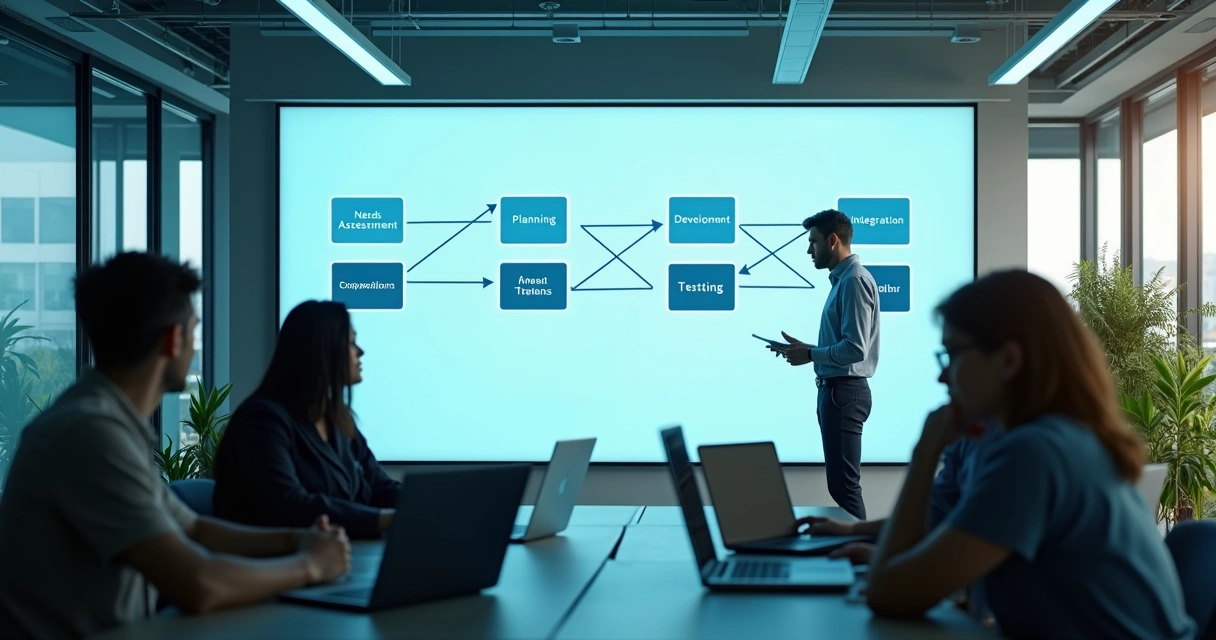
Here’s a typical journey from “idea” to “running system”:
- Needs assessment. The discovery phase. We map current workflows, identify where money leaks or where teams feel pain. We also review legal and regulatory needs, making sure GDPR or industry-specific rules are baked in from day one.
- Planning and architecture. We set out which features matter, what integrations are needed (think: email, payment gateways, government databases, reporting tools), and what success looks like in measurable terms.
- Development and prototyping. This stage delivers the first live version. User feedback is critical; we iterate fast, test with your team, and adapt to feedback on the fly.
- Integration. Custom tools must “speak” with back-office systems—like accounting platforms, order fulfillment partners, or industry databases. This step is where off-the-shelf platforms often fall short.
- Testing and launch. Before rollout, every workflow is tested for accuracy and compliance. No one wants GDPR panic at go-live.
- Ongoing maintenance. Updates aren’t just about fixing bugs; they’re about matching new business directions, rules, and security needs. You’re not locked in—instead, you work hand-in-hand with your developer.
We have broken down these stages further at our resource center on personalised software, including real SME project journeys and timelines.
Concrete benefits SMEs can expect from tailored solutions
We often get asked if bespoke digital tools actually make a difference or if the claimed results are just marketing. Let’s take a practical look at common benefits—and what they look like for real European SMEs:
- Alignment with business needs. No more forcing your team into clunky workarounds. The tools follow your process, not the other way around.
- Integration with existing systems. Regulatory reporting, payment providers, logistics, marketing—all of it can be stitched together. Custom integration avoids mistakes from manual imports or spreadsheets.
- Improved scalability. If your team grows, or you add a new branch or product line, your digital tools scale with you. You’re not chained to user-based pricing or feature paywalls.
- Data ownership and privacy. All data stays on your chosen servers, within Europe if you wish. This is critical for GDPR and industry-specific mandates.
- Sharp cost savings over time. As the European Commission’s impact assessment found, digital documentation and custom automation can save tens of thousands per company each year in avoided manual workload and errors.
- Competitive edge in your niche. Your solution is one-of-a-kind. Rivals using generic SaaS get stuck doing things the standard way; you differentiate by being faster or smarter.
- Automation of repetitive tasks. No more manual imports, redundant sales follow-ups, or double-entry. Processes like lead reactivation and customer qualification can be run on autopilot (learn more in our automation section).
Take a construction supplier we’ve worked with. Their off-the-shelf inventory tool required five manual data transfers weekly between orders, warehouse, and accounting. After introducing a custom solution that connected all sources, their admin hours dropped by 30%, and mistakes vanished.
Real financial impact, not just a smoother workflow.
Key decisions: When is a tailored solution the better choice?
We don’t recommend building bespoke apps for every use case. Generic tools have a place, especially if you’re just starting, or your workflows are standard and unlikely to change. But certain scenarios all but demand a personal touch:
- If your business has non-standard workflows, for compliance, pricing, or customer relations
- When recurring SaaS costs are stacking up—do the math for the next 3–4 years
- If you rely on lots of manual “glue work” between tools (copy/pasting, Excel exports, duplicate data entry)
- When integrating with local government, VAT, or EU databases
- If you need rock-solid GDPR/data residency guarantees
- If you see missed sales or customer churn because your current tools can’t keep up

A bespoke automation solution can especially pay off for industries with heavy regulation (finance, health, logistics) or fast-changing product lines (tech, e-commerce, SaaS resellers). For more, see our deep dive on integrating European SME systems.
Challenges and what to watch out for
Of course, getting a digital system built for you comes with its own trade-offs. You need to plan for:
- Upfront investment. Custom builds can cost more at the start. The savings show up as you cut license fees and wasted admin time.
- Longer timelines. It takes thoughtful analysis, design, and iteration. Rushing leads to missed needs.
- Vendor relationship. You’ll depend on your development partner—so future availability and documentation matter.
- Scope creep. Without clear requirements, it’s easy (and costly) to lose focus. This is the most common pitfall.
There’s also the risk of choosing the wrong stack or not planning for future business needs. At Everdados, we always develop using technologies with wide support, document outcomes, and consider not only what works now, but what will work if you double next year.
European SMEs have a few specifics to keep in mind:
- GDPR-compliant data handling and storage
- Integration with e-invoicing and tax platforms that are country-specific
- Multi-language support for team and client tools
- Permission controls to match local labor and privacy laws
Good planning now saves headaches later.
How much does bespoke software actually cost?
Costs for a fully tailored SME system can start from a few thousand euros for a simple automation or workflow, and go up for multi-module dashboards or industry-specific integrations. What you spend upfront often pays for itself in two to three years, thanks to slashed SaaS rates and eliminated manual work.
To give context: The European Commission report projected digitalisation can save European machinery firms up to EUR 201,000 per year. If your solution streamlines just 20% of operations, the maths quickly justifies the upfront price.

Be aware of ongoing costs: hosting, updates as your business shifts, and sometimes small support retainers. But, unlike SaaS, you control the terms. You own your setup.
Further guidance on typical build and ownership costs for European SMEs is available in our common failures to watch for in automation projects guide.
Pitfalls and mistakes SMEs should avoid
Even strong organisations get tripped up by the same mistakes. Some common issues we see:
- Unclear goals. “Make it better” doesn’t cut it. List measurable outcomes – faster reporting, 90% less double entry, lower customer churn.
- Letting software replace people judgment. Automation is great, but shouldn’t dictate your strategy.
- Undersupported launches. Teams need easy support, FAQs, and training when tools go live.
- Ignoring legal/data policies till the end. GDPR is not a tick-box. Design with privacy and transparency from the start.
- Poor documentation. Future changes become a pain without simple, up-to-date notes.
We’ve written more about these risks and simple prevention methods in our AI automation section.
For European SMEs, remember: Always validate that new tools play nicely with national e-invoicing/tax APIs, don’t leave language needs till the last minute, and check your developer’s GDPR approach in detail.
Cost comparison: SaaS subscriptions vs. custom solutions
For most SMEs, the first concern with tailored tech is cost. To help decision-making, here's a plain example. Imagine an SME using five different platforms—each with separate monthly fees, limited integration, and occasional missed tasks.
- SaaS scenario (over 5 years): EUR 4,000/year per tool x 5 = EUR 20,000/year; over 5 years, EUR 100,000. Assume 7% price hikes per year, and the real total pushes higher.
- Custom scenario: EUR 25,000–40,000 build cost, plus EUR 2,000/year for hosting and support, over 5 years: EUR 35,000–50,000. You own the results and can adapt them.
We’ve found that when companies do the 3–4 year comparison—including manual time saved, cost of errors, and data access—the case for owning your systems is compelling.
In our experience, smart customisation delivers ROI years faster than most expect.
Summary: Making the right call for your SME
No two businesses are the same. But a digital plan tailored to real needs—where you define what matters, own your data, and automate only what makes sense—puts you back in control.
Whether you run a small logistics company, a local health provider, or a pan-European e-commerce shop, tailored solutions aren’t just about features. They’re about making your team’s time, budgets, and energy go further, with less risk and more flexibility.
We at Everdados specialise in removing the chaos: automating your lead reactivation, connecting old and new systems, and building digital tools where you call the shots. You can read more about our project journeys, automation strategy, and practical advice across our resource library.
You can choose: ordinary and expensive—or custom and controlled.
If you want to turn your SME’s tech from a cost center to a growth engine, schedule a call with Everdados and see what’s possible when the software finally fits.
Frequently asked questions
What is custom software for SMEs?
Custom software for SMEs is a digital solution developed specifically for the business, not a standard, mass-market tool. It covers exactly what you need, ties into your current systems, and operates by your rules—unlike SaaS or boxed apps where you adapt to their limits. At Everdados, we build tools that automate tasks unique to your processes, connect to required databases, and keep data close at hand.
How much does custom software cost?
Costs vary, but we see successful SME projects start from EUR 5,000 for small automatisations to EUR 25,000+ for broad dashboards or integrations. Ongoing costs include hosting and minor updates. Many companies recover these costs within 2–3 years from lower subscriptions and fewer admin mistakes.
Is custom software worth it for small businesses?
It’s worth it if you face limits with out-of-the-box software—such as high fees, poor fit, or too much manual control needed. Bespoke tools make sense for non-standard reporting, unique sales, local compliance, or when every Euro and hour counts. For very small companies, generic apps might fit for a while, but most growing SMEs eventually outgrow them.
How to choose a custom software provider?
Seek a partner with experience in your sector and in data compliance (like GDPR). Review their project process, ask for references, and check how they handle support, documentation, and updates. At Everdados, our approach starts with mapping your business pain points, not selling extras you won’t use.
What are the main benefits of custom software?
The main benefits are direct cost savings over time, tighter workflow alignment, full data ownership, easier European regulatory compliance, and business differentiation. Tailored digital tools help SMEs work smarter, adapt faster, and spend less on hidden admin tasks.