
Having worked on digital transformation projects for over two decades, I have seen European SMEs go through sweeping changes in how they manage their day-to-day operations. These businesses face unique challenges, from fragmented processes to tight margins and increasing compliance obligations. One word often emerges as a potential game-changer: automation. But despite all the buzz, people still ask—what does it really mean for a small or midsize European company? And how can it genuinely move the needle?
In this guide, I’ll share a clear and practical perspective rooted in both research and hands-on experience. Along the way, I’ll reference real stories, address frequent pitfalls, and bring in a few helpful resources, so your business can carve out a smart, resilient automation strategy.
Understanding business process automation
Let me begin with a clear definition because it’s a term often muddied by jargon. In my experience, business process automation means using technology to take over recurring, rules-based tasks in your daily business operations. These can range from sending follow-up emails, invoice generation, CRM data entry, or even categorizing support tickets. For European SMEs, manual processing is a hidden drain on time and cost that most underestimate—until they see the before and after.
Automation can harness everything from simple workflow tools to sophisticated AI. The idea is not to shut out human talent but to let your people focus on work where human creativity and judgment matter most, while software quietly handles the rest.
When I look at the latest Eurostat data, the pace of technological adoption among European firms is picking up. In 2025, one in five enterprises with 10+ employees were using some form of AI technology, a notable jump from just two years before. While bigger firms still lead, smaller businesses are starting to catch up.
Cutting repetitive tasks frees up time for growth.
I’ve seen firsthand: when SMEs automate thoughtfully, overhead shrinks, errors drop, and teams enjoy their work more. But before going further, it helps to understand the most impactful use cases—ones likely familiar to any SME in Europe.
Where automation brings immediate results
No matter how specific your sector, I’ve found some common bottlenecks where technology can add value. Below are the cases I see most often:
- CRM and lead management
- Lead reactivation
- Compliance and regulatory documentation
- Customer support and qualification
- Back-office workflows
- Interdepartmental communications
CRM and lead management
Customer relationships are everything for SMEs. Yet, I often hear about sales teams spending hours updating CRMs, sorting through old leads, or sending manual follow-up emails. Automated workflows can intelligently nurture leads, send reminders, assign tasks, and make sure nothing falls through the cracks. In businesses I’ve served, this often means a clear uptick in conversion rates with less manual chasing.
Lead reactivation
Another area where digital solutions shine is bringing back lost leads. Everdados, for example, specializes in setting up automated systems that reach out to contacts who went cold months—or years—ago, with personalized and timely messages. I’ve helped customers recover sales opportunities that would otherwise have been forgotten.
Compliance and regulatory documentation
European SMEs wrestle with a tangle of regulations, from GDPR to sector-specific directives. With digital logs, automated alerts, and document workflows, I’ve seen businesses avoid costly mistakes and stay ready for audits. According to recent studies, AI-powered tools can even help reduce red tape, leading to significant cost savings.
Customer support and qualification
As consumer expectations grow, quick answers matter. Conversational AI agents—like the ones developed by Everdados—can respond to routine queries 24/7, escalate complex issues to humans, and qualify leads before they even talk to a salesperson. I find these solutions are helping SMEs serve more customers without hiring entire new teams.
Back-office workflows
From invoicing and expense approvals to scheduling or staff onboarding, automating back-office tasks cuts errors and improves the speed of core operations. Over the years, I’ve implemented systems that give managers a bird’s-eye view of critical workflows with far less effort.

Is automation really worth it?
As someone who has worked with dozens of small business owners, I can say the first question they ask is: Will this really help? It’s a fair point. Technology always looks good on a slide deck, but for an SME, every euro and every hour counts.
Drawing from reports like those compiled for the European Commission, we see measurable gains. For example, studies have shown that AI and automation can cut administrative costs by up to 25% for all companies, and up to 35% for SMEs. In fact, this could mean saving billions across Europe. But numbers alone aren’t enough—
Real results show up when technology solves headaches you face every day.
In my own projects, I’ve seen two outcomes stand out: streamlined communication and shorter sales cycles. Salespeople spend more time actually selling. Managers see reports without nagging teams. Clients get answers quicker. And everyone benefits from fewer copy-paste mistakes in their paperwork.
Time savings and error reduction
I once worked with a logistics SME in Spain. The team was manually confirming delivery slots by email, often making mistakes. After implementing automated confirmation workflows, not only did they cut coordination time in half, but errors shrank from daily headaches to rare events. More importantly, nobody spent the weekend cleaning up missed appointments anymore.
Cost management
The long-term payback for resource-strapped SMEs comes in cost reductions. From fewer SaaS subscriptions (when processes are consolidated under custom tools) to lower payroll on repetitive jobs, the impact is felt across departments.
Scalability and growth
When processes run themselves, SMEs can take on more business without immediately adding headcount. This capacity for growth—without the same incremental costs—is one reason automation stands out as a growth strategy. As a result, small companies can compete effectively, even with larger players.
The tailored route vs. generic SaaS
There’s no shortage of software promising instant efficiency. From off-the-shelf tools to industry-specific SaaS, options are everywhere. The real choice, though, is between buying a one-size-fits-all solution and building something designed around your business.
When SaaS works
Plug-and-play platforms suit businesses with standard, well-defined workflows. They are good when budget is tight, and your requirements are no different from the average user. But in my experience, as soon as a business deals with unique processes—or handles sensitive data across multiple tools—generic platforms start to fall short.
The power of tailored solutions
Custom-built automation platforms, like those developed at Everdados, bridge the gaps SaaS leaves behind. We build dashboards that only show the data you need. Alerts trigger in a language your staff understands. Integrations cover legacy systems, European data standards, and niche tasks that a market SaaS setup would never consider.
- Centralize scattered data from different departments
- Automate sector-specific workflows
- Comply with regulatory frameworks unique to your market
- Connect to legacy or local software often overlooked by international SaaS
The main downside of going custom is, of course, the initial investment. But after the transition, most SMEs report a clear drop in software sprawl and support headaches. There’s genuine peace of mind in owning your own system—without depending on third-party licenses or unpredictable price hikes.
If you’re weighing your options, I've covered this topic—and the challenges of automation rollouts—on the Everdados automation strategies blog. There you can read more about the pros and cons involved.
Real-life automation: Use cases in European SMEs
There’s a difference between reading about technology and seeing it in action. Here, I’ll share specific examples I’ve worked on, where digital process transformation changed the day-to-day business for real people.
Automating CRM follow-ups in a Swedish wholesaler
The client ran a family business supplying office products. Their CRM was loaded with half-finished orders and old leads. I set up a solution to automatically send custom follow-up messages at specific intervals, based on the lead’s previous purchase cycle. In the first quarter after launch, old lead conversion jumped by 18%, and the sales pipeline felt much more alive. What struck me most? Their sales staff spent more time closing, not chasing.
Reactivating leads in a Portuguese travel agency
This agency’s database was full of people who inquired but never purchased. With a clever sequence of personalized emails and WhatsApp messages powered by Everdados, leads from the past 3 years began to respond. Around 12% returned with new bookings, despite being considered “lost” before. It proved to me—hidden value often waits in old data if you have the right digital toolkit.
Compliance management for a Dutch consultancy

Firms in the Netherlands face strict documentation. The consultancy’s paperwork was scattered across shared drives and emails. By digitizing document collection, creating audit logs, and automating reminders for policy reviews, audits became smoother. The time to prepare for audits dropped from weeks to a few days. Risk of non-compliance became far less worrisome because digital trails were always ready.
Automated customer support in an Italian ecommerce startup
Customers expected quick answers—24/7. We set up a conversational AI agent to reply instantly to routine support requests, freeing up staff for more complex, value-added tasks. Within weeks, support ticket resolution speed doubled. Customer reviews often mentioned “fast replies,” and staff reported fewer weekend on-call hours. For a small team, this made a major difference in work-life balance.
For more stories like these, I recommend checking Everdados’ guides to AI in business operations and lessons learned from failed projects at common digital project pitfalls.
Conversational AI: Beyond chatbots
I’m often asked if chatbots are just a passing trend. In reality, conversational AI goes far beyond scripted Q&A. Advances in natural language processing mean these agents can understand context, pull data from your systems, and adapt escalation based on the customer’s mood or urgency.
According to recent research, larger companies are leading in generative AI use, but growth among smaller firms is accelerating. In a 2024 OECD survey, nearly 39% of German SMEs were already using generative AI tools, with comparable results in Austria and Ireland.
These solutions have moved far beyond English-only responses and canned scripts. Today’s AI-powered agents can explain documents, book appointments, qualify leads based on CRM data, or provide regulatory guidance specific to your region and sector.
AI conversations make your support team available—day and night.
Some practical outcomes I’ve seen include:
- Reducing wait times for new customer inquiries
- Automatically triaging and routing tickets for faster responses
- Pre-qualifying sales leads before a human gets involved
- Helping with basic compliance queries, so only complex ones reach your legal team
If you’re curious about what’s possible, I recently wrote about what separates “good” automation from the rest in my insights on customized business software.
Integration across departments: Making automation work together
It’s one thing to have a tool for sales, another for finance, and something else for support. The magic happens when these processes are not isolated but share information between them. I call this “digital integration”—where software doesn’t just run repetitive steps, but talks to other systems, updating data everywhere it should.
The benefits are clear:
- No double data entry—customer records update automatically across billing, CRM, and reporting
- Alerts triggered across departments: sales knows when a new customer is onboarded, support is ready for queries, finance gets notified of overdue payments
- Managers gain real-time insight into the entire business, instead of patchy, delayed spreadsheets

I’ve helped companies who once relied on weekly meetings or endless email threads to reconcile information. After connecting their systems, they gained both clarity and speed. If integration is top of mind, see my deep dive at integrating European SME systems.
Compliance and regulatory peace of mind
Few subjects make SMEs in Europe more nervous than compliance. The exposure to fines for data breaches, late filings, or non-compliance with tax rules can be real threats. Automating compliance doesn’t erase legal duties, but it provides auditable logs and reminders, automates document collection, and assists with safe data handling.
- Automated document retention policies to stay on top of GDPR rules
- Time-stamped audit trails for critical approvals
- Centralized dashboards for reporting obligations
- Cross-checks and alerts to prevent missed deadlines
It’s not just about avoiding pitfalls. Automated digital compliance means SMEs can respond quickly to regulatory changes—often a real edge when laws update, or when expanding into new European markets.
According to a study by the Employers' Group, AI-powered compliance solutions could save billions in administrative costs. These savings make a practical difference for smaller businesses, where every euro counts.
The people side: Cultural adoption and change management
If there’s one thing more challenging than technology, it’s people. I’ve seen great projects fall flat—not because the software was bad, but because teams didn’t buy in. My number one lesson? Automation should empower employees, not scare them.
Here are the steps I recommend for positive cultural adoption:
- Involve staff early: explain what’s coming, why, and how it helps them individually
- Offer training sessions focused on hands-on use, not just theory
- Collect feedback and act on it—adapt workflows to fit team realities
- Highlight quick wins, so momentum builds
- Showcase team members who find new ways to use the digital tools
Most employees, after the transition, appreciate spending less time on repetitive work and more on tasks with real impact. The trick is to be transparent from the outset, keep lines of communication open, and treat digital transformation as a team project, not a top-down command.
Strategic role in digital transformation
I see the benefits most in businesses that treat automation as part of a bigger journey—not as a one-off project. It’s not about replacing staff, but about enabling growth, resilience, and creativity. Digital transformation is as much about new ways of working as it is about technology.
Strategic advantages I’ve seen include:
- Greater agility: responding to market changes with rapid process tweaks
- Cost control: scaling without a corresponding rise in headcount
- Data-driven decisions: always having the latest numbers on hand
- Competitive differentiation: unique workflows that aren’t available to everyone else in the market

Small and mid-sized firms who embrace digital change are better prepared for anything—market disruptions, regulatory surprises, or growth opportunities. Seeing it in action, I believe every SME leader should consider automation an integral part of digital strategy, not an afterthought.
Overcoming common challenges
While the gains are clear, I’d be remiss not to mention the recurring challenges that can derail automation projects. Based on my years working with SMEs, these are the pitfalls to watch for:
- Poor process mapping: Automating a broken process just speeds up mistakes. Take time to clarify each workflow before bringing in technology.
- Lack of integration: One tool here, another tool there, and no connection between them—this wastes the potential for centralization and actually creates extra work.
- Ignoring staff input: The people closest to the work have valuable insight. If you skip their perspective, solutions often miss the mark.
- No clear ownership: Assign a champion—someone responsible for results—otherwise projects drift or stall.
- Inadequate training: Digital systems can only add value if people know how to use them with confidence. Ongoing support is critical.
For a deeper look at these missteps, read my extended review at seven common failures when automating processes in small businesses.
Action plan: Assess, implement, and scale automation
Ready to get started? In my experience, the following practical steps help European SMEs build digital process transformation that actually delivers value:
1. Map your core processes
Start by documenting your most time-consuming or error-prone tasks. Get input from staff across departments. The goal isn’t fancy diagrams—just clear steps written down. You can use sticky notes, whiteboards, or digital tools—whatever works for your team.
2. Pinpoint automation opportunities
- Look for repetitive manual data entry
- Identify delays caused by handoffs between staff or departments
- Check for regulatory processes with regular, predictable deadlines
- Review client journeys where follow-up is slow or inconsistent
3. Set clear goals
Successful projects start with measurable objectives. Is it about saving 10 hours a week? Reducing support response times by 30%? Improving data accuracy for compliance? Quantify your aims before talking to vendors or developers.
4. Choose the right approach: SaaS or custom
If your needs are broad and standard, SaaS might suffice. For more complex, regulated, or integrated requirements, consider a tailored solution similar to those provided by Everdados.Remember, you don’t need to automate everything at once. Start with high-value areas and expand step by step.
5. Pilot and collect feedback
Test on a small group first. Make adjustments. Treat early mistakes as learning. Staff feedback here is gold—you’ll uncover tweaks that make the final solution smoother.
6. Integrate and train
Connect your digital tools across departments, so information flows without barriers. Plan for ongoing training—not just a one-off session—so every team member feels comfortable and confident.
7. Monitor, adjust, and scale
Track metrics tied to your original goals. As you see results, expand to more processes or departments. Stay open to tuning workflows as your market and business needs change.
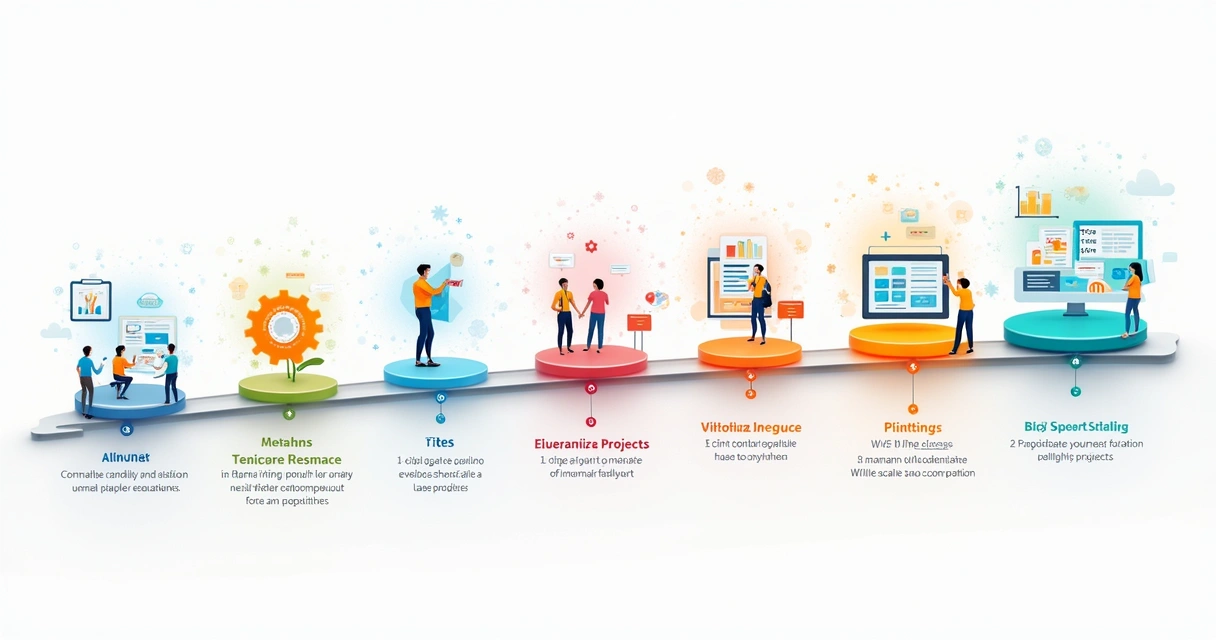
If you want a step-by-step guide tailored for your unique market, reach out—I’m always happy to talk SMEs through the process and share what’s working for similar businesses.
Why European SMEs should care—now
The numbers are clear. Whether it’s the Eurostat reports on AI uptake or surveys from the OECD showing generative AI making real inroads among SMEs, Europe’s digital race is heating up—and the gap between SMEs moving forward and those lagging is widening.
Yet, I don’t believe in change for its own sake. The true opportunity for European SMEs is to use technology as a tool for solving the real, everyday pain points I see in every business I’ve helped. Automated processes only matter if they make your team’s work more enjoyable, your service better, and your growth steadier.
If you’re considering where to begin, my honest advice is to start small, involve your team, and choose solutions that fit your context—not just the latest trend or the lowest up-front cost. Custom builds, like the ones my team at Everdados creates, might be ideal for those with complex challenges, but even simple digital tweaks can make a clear difference.
If you want to see how automation can take your business further, or need a trustworthy partner, I invite you to discover what Everdados can do for you—a next step toward a more connected, responsive, and resilient business.
Frequently asked questions
What is business process automation?
Business process automation is the use of technology to carry out repetitive or rule-based tasks—like data entry, customer follow-up, invoicing, or regulatory reporting—so humans can focus on activities that require judgment, creativity, or relationship-building. In the context of European SMEs, this typically involves software that manages workflows, sends reminders, creates logs, and pulls data from various sources to improve consistency and speed.
How can automation help my SME?
For most SMEs, automation means faster completion of routine tasks, fewer mistakes, and more time available for customer engagement or business development. It can also reduce operational costs, improve compliance, and make scaling smoother. For example, automating sales follow-ups or support responses can enable your team to handle more business without growing the team at the same rate.
Is automation expensive for small businesses?
The cost varies depending on the solution. Standard SaaS tools are generally cheaper up front, while tailored systems may have higher initial investment but lead to savings by reducing the need for multiple subscriptions and manual labor. According to studies on EU administrative costs, process automation can save SMEs up to 35% on compliance-related expenses, making it a worthwhile long-term investment for many.
What are the best tools for automation?
The best tools depend on your business size, sector, and particular workflows. For some, simple workflow automation platforms suffice. For others—especially where European regulations or custom integrations are involved—tailored solutions, like those developed at Everdados, are preferable. Consider solutions that can integrate with your current systems and allow easy updates as your business grows. For more on this subject, there’s a useful resource on custom automation software at Everdados.
How to start automating business processes?
Begin by mapping your key workflows and identifying where manual tasks eat up the most time or create the most errors. Involve your team, set clear goals, and start with a pilot project in one area (like sales follow-up or compliance). Track results, collect feedback, and expand gradually. If you want guidance on process mapping or vendor selection, I recommend consulting in-depth articles like those on Everdados’ automation strategies blog.